Country Music Sucks: A Designer’s Embroidery Review
When I first opened the Country Music Sucks SVG, I’ll admit I smirked. It’s bold, unapologetic, and clearly aimed at a specific crowd. As someone who spends hours at the digitizing station and has stitched everything from delicate baby rompers to gritty motorcycle club patches, I’ve learned that the best designs don’t try to please everyone—they connect with someone. This print-ready graphic, delivered as an SVG and DXF in a zipped file, is listed under Print Templates and Graphics. But I’m evaluating it from the embroidery side: can this design hold up after being digitized, hooped, and stitched onto real products? Let me walk you through what I see, what worries me, and where I’d confidently use it.
First Impressions: Mood, Shape, and Embroidery Potential
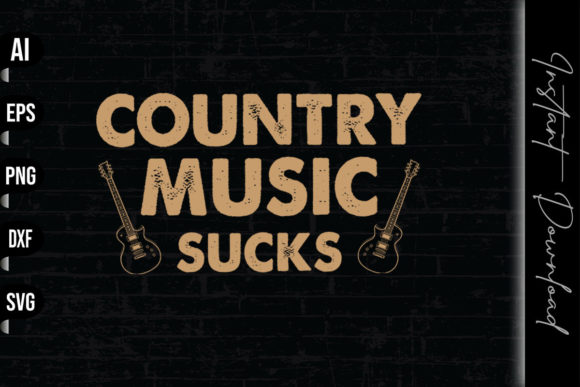
The moment I saw the lettering and layout of Country Music Sucks, I knew it wasn’t built for lace or fills. The design is clean, with a straightforward, slightly rebellious typography. The spacing between letters appears generous, which is a huge plus for embroidery—tight lettering turns into a thread soup fast. The mood is sarcastic, almost punk, and I immediately pictured it on a distressed denim jacket, a canvas tote bag for a craft fair, or a sweatshirt worn by someone who genuinely dislikes fiddle solos. The shape is a simple horizontal block, which makes it easy to center on a variety of blanks. As a designer, I appreciate that the layout avoids tiny serifs and thin lines; those are nightmares for satin stitch and can cause stitch density issues.
Real Case: A Custom Tote Bag for a Local Shop Client
Last week, a customer came in wanting a bold tote bag for her cousin who “can’t stand country music.” I suggested Country Music Sucks after showing her the SVG mockup. The design is print-ready, but I knew I’d need to digitize it into a proper machine embroidery design—the SVG gives me a clean vector to trace. For the tote, I used a medium-weight cotton canvas, a medium hoop size (about 5x7 inches), and a tear-away stabilizer. I set the lettering as a satin stitch with a 0.4 mm width, adjusted the underlay to handle the weave, and ran a test on scrap. The result? Crisp, readable, and the edges stayed tight. My client was thrilled because the design didn’t shrink into a blob or distort on the bag’s seams. That’s the kind of real-world test that tells me this graphic, once properly digitized, works for custom apparel and personalized gifts.
How Country Music Sucks Performs Across Different Products
I’ve mentally placed this design on a dozen products. Let’s break down performance by project type:
- Sweatshirt embroidery: The bold lettering stands out on fleece, but you must use a cutaway stabilizer to prevent puckering. The design’s open letter shapes let the fabric breathe, so stitch density stays manageable.
- Embroidered patch: If you’re making a patch for a denim jacket or cap, the SVG converts well to a satin-stitch border. Just keep the patch size under 4 inches wide to avoid tension issues.
- Tote bag design: Works great on both cotton and polyester totes. I’d recommend a fill stitch for larger letters if you go bigger than 6 inches, but satin stitch is fine at smaller scales.
- Baby embroidery: Honestly, I’d skip this design for baby clothes. The theme is too edgy, plus tiny onesies require very small lettering that would lose the punchy look. Save it for older kids or adults.
- Holiday gifts and personalized items: This graphic shines when you pair it with a recipient who has a strong opinion. Think a custom mug with the design screen-printed (since it’s a print template) or a pillow cover stitched in black thread on a cream background. The handmade product feel is undeniable.
Where I’d Use This Design Carefully
No design is perfect for every surface. Here’s my honest warning on where Country Music Sucks needs extra attention:
- Small hoop sizes: If your hoop is under 4x4 inches, the lettering becomes cramped. The word “Music” could lose legibility below 1.5 inches tall. Test at the size you plan to sell.
- Stretchy fabrics like knits or jersey: Without proper stabilization, the satin stitches can pull and distort the letters. Use a medium-weight cutaway stabilizer and reduce the stitch density slightly.
- Dark fabrics: The design works best with high-contrast thread. Light gray or white thread on black fabric will pop. Dark thread on dark fabric? Poor visibility. Always test a thread color swatch.
- Layered garments (jackets, hoodies): The extra bulk from zippers and seams can cause registration shifts. Hoop through only one layer if possible, or use a floating method with strong stabilizer.
- Products washed frequently (kitchen towels, apron): The satin stitch edges may fray over time. For high-wash items, consider a running stitch outline or reduce the density to minimize thread wear.
Visual Appeal, Customer Trust, and Brand Consistency
When a customer sees Country Music Sucks on a finished product, they either love it or laugh—and that’s exactly the reaction an Etsy seller or craft business wants. The design creates instant recognition. If you’re selling at a craft fair, this graphic will draw in a certain audience and repel others, which is fine for niche merchandise. On the trust side, the stitching must be clean: uneven letters or skipped stitches will make the product look amateur. I always recommend digitizing the design yourself or buying a properly digitized embroidery file—the SVG is a starting point, not the final stitch file. For small shop product consistency, use the same thread brand, stabilizer, and settings every time.
Practical Designer Notes for Embroidery and Print Use
Before you start a production run of custom apparel or personalized gifts with this design, here are my non-negotiable steps:
- Test on scrap fabric first. Even if you’re using a perfect digitized file, fabric behaves differently. Run a quick sample on a fabric swatch that matches your final product.
- Check thread color contrast. Hold your thread against the fabric under shop lighting. The design’s readability hinges on bold contrast. For dark fabric, use white, neon, or metallic thread. For light fabric, black, navy, or red works.
- Review stitch density. The original SVG might have thin or thick lines. When digitizing, ensure the satin stitch width is at least 3 mm for medium letters. Dense fill stitches can cause puckering on thin fabric.
- Inspect small details. The apostrophe in “Sucks” and the letter spaces are critical. Zoom in on your digitizing software. If any letters touch, separate them manually.
- Test black and white mockups. View the design in grayscale to see if it loses shape. This helps with printable mockup previews for listings.
- Compare light and dark fabric backgrounds. I always stitch one sample on white and one on black. The difference in legibility can be huge.
- Use proper stabilizer. For woven fabrics, tear-away works. For knits, cutaway is non-negotiable. Don’t skip it—this is how you avoid distortion.
- Check licensing before selling. The Country Music Sucks SVG is a print-ready graphic file. Before you sell finished items or offer it as a digital embroidery file (after digitizing), confirm the license terms. If you bought it from a marketplace, review the commercial use policy. Some graphics allow unlimited physical products but restrict digital resale. Protect your small business by knowing the rules.
Final Thoughts From a Working Designer
Country Music Sucks is a polarizing, effective design that I’d confidently use for clients who want attitude in their craft business merchandise. It’s not a universal hit, and that’s okay. As a design asset within the Print Templates category, it gives you a clean vector to adapt for embroidery, screen printing, or direct-to-garment applications. Just remember: the SVG is the blueprint, not the finished machine embroidery design. Invest the time in proper digitizing, test your samples, and respect your stabilizer. If you do, this design can produce embroidered patches, sweatshirt embroidery, and tote bag designs that make people smile—or at least smirk. That’s the kind of reaction every Etsy seller and craft fair vendor hopes for. Now go thread your machine.