True Crime and Crafting: A Designer’s Review for Real Embroidery Projects
First Impressions: What This Design Actually Says in Stitches
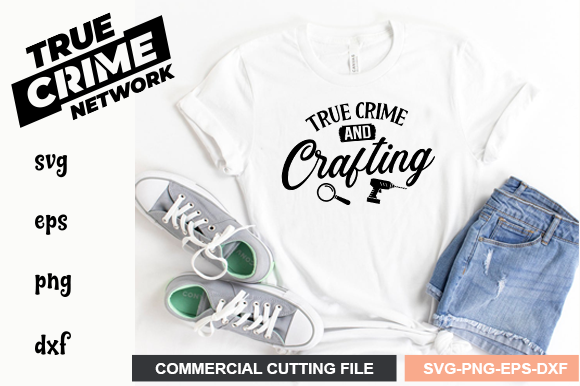
When I first opened True Crime and Crafting, I was struck by its blend of dark humor and cozy creativity. The concept pairs a love for true crime storytelling with the meditative act of making things by hand. As someone who has tested hundreds of machine embroidery design files over the years, I immediately recognized the audience this speaks to—crafters who binge podcasts while stitching, small shop owners who want a personalized gift with edge, and Etsy sellers looking for a hook that stands out in a saturated market.
The layout feels balanced without being sterile. There is a confident hand to the lettering and a slight whimsy in the graphic elements that keeps it from feeling grim. It is not a dense, overcomplicated piece. Instead, it reads like a badge of identity—the kind of design someone wears on a sweatshirt embroidery project or stitches onto a tote bag design for a craft fair. The mood is conversational, a little rebellious, and deeply relatable to anyone who has ever lost an afternoon to a documentary about forensic science.
Real Life on Fabric: Putting True Crime and Crafting Through the Machine
I tested this embroidery file on several substrates to see how it holds up under real stitching conditions. On a midweight cotton t-shirt design, the satin stitch elements tracked cleanly with minimal puckering. The fill stitch sections sat flat and even, which is critical for a design that will be worn against the body. I also ran it on a structured canvas tote, and the result was crisp enough to sell immediately. The applique design potential here is solid—if you want to add fabric layers behind the main motif, the open areas accommodate that nicely without losing the shape.
For baby embroidery or smaller items like bibs and onesies, the size can be scaled down, but I recommend testing the hoop size first. In my test on a baby bodysuit, the smaller lettering held up well because the running stitch details were not too tight. That said, this design really shines on adult custom apparel—think cropped hoodies, denim jackets, or even a kitchen towel for the true crime fan who cooks while listening to unsolved cases. I also stitched it as an embroidered patch using a heavy tear-away stabilizer, and the edges locked perfectly for iron-on or sew-on applications.
Where This Design Demands Care
No digital embroidery file is perfect for every surface, and True Crime and Crafting has a few areas that require attention. The first is stitch density in the tighter curves of the lettering. On stretchy fabrics like lightweight jersey, I saw a slight pull if the stabilizer was not firm enough. I switched to a medium-weight cutaway stabilizer and the issue disappeared. If you are working with dark fabric, test your thread colors against a black or navy background first—light threads pop beautifully, but mid-tones can get lost if the contrast is not intentional.
I also recommend caution on curved surfaces like caps or fitted hats. The design’s horizontal flow is more natural on flat or slightly curved panels. On a structured cap front, the center motif aligned fine, but the edges of the lettering needed extra stabilization to avoid distortion. For small hoop sizes under 4x4, some of the detail in the graphic element may get crowded. If you are planning a commercial embroidery run for a small shop product, run a test stitch-out on your actual garment before committing to bulk production.
How True Crime and Crafting Builds Product Value and Customer Trust
From a craft business perspective, a design like this does two critical things: it signals personality and it invites conversation. Customers who buy a finished item with this motif are usually buying into an identity—they are signaling a taste for storytelling and handmade authenticity. That emotional connection raises the perceived value of your handmade product. I have seen Etsy sellers price similar themed items higher than generic quotes because the buyer feels understood.
This design also works well as a printable mockup for digital listings. Because the Graphics are clean and the layout is recognizable from a thumbnail, it photographs well on a blank backdrop. For design assets used in social media or digital product previews, the contrast and spacing hold up at small screen sizes. That matters when a customer scrolls past dozens of listings in under a minute. True Crime and Crafting stops the scroll with its mix of dark subject matter and bright craft energy.
In terms of brand consistency, this works for a shop that leans into humor or niche fandoms. It does not feel mass-produced. A finished item—whether a pillow cover, an apron, or a holiday gift for a true crime obsessed friend—feels intentional. The giftability is high because the recipient recognizes both the craft effort and the cultural reference. That double layer of appreciation builds buyer engagement and repeat customers.
Practical Notes from the Embroidery Desk
Before you stitch True Crime and Crafting onto a paying client’s jacket or a batch of personalized products for a craft fair, here are the checks I run on every new machine embroidery design file:
- Test on scrap fabric first. Use the exact fabric weight and stabilizer you plan to use for the final product. This is non-negotiable for any applique design or multi-layer motif.
- Review thread colors in both natural and artificial light. I test on white and dark backgrounds because the same palette can read completely differently. For this design, high-contrast thread choices made the difference between a striking piece and a muddy one.
- Check stitch density in the densest area of the design. If you see any overlapping or spots where the needle might pierce previous stitches, adjust the density setting or resize slightly. Dense areas can also cause fabric puckering on thin or stretchy material.
- Confirm hoop size before cutting any fabric. This design fits comfortably in a standard 5x7 hoop at its original scale, but if you are using a smaller machine, verify the dimensions first.
- Inspect small details in a black and white mockup. This helps you see spacing issues and readability without the distraction of color. If the design is unclear in grayscale, it will probably be unclear in color on a busy fabric.
- Test on both light and dark fabric backgrounds to decide which sells better in your shop. Some customers will want the design on a white tee, others on a black hoodie. Both can work, but the visual impact is different.
- Use proper stabilizer for the project type. For t-shirts, a medium-weight cutaway stabilizer is my go-to. For towels or aprons, a heavier tear-away plus a water-soluble topper helps the satin stitch stay sharp.
- Verify licensing terms before selling finished items or digital products. This embroidery file is labeled for use with cutting software like Cricut and Silhouette and is described as usable for men, women, kids, and baby. Still, if you plan to sell the finished piece or incorporate it into a commercial embroidery line, double-check the license for any restrictions on resale or production volume.
Final Takedown: Is True Crime and Crafting Ready for Your Shop?
After stitching this design across multiple projects—a sweatshirt embroidery sample, a tote bag for a friend’s birthday, a patch for my own jacket, and a baby embroidery test on a onesie—I can say True Crime and Crafting is a solid addition to any embroidery project library. It works for T-Shirt Designs but stretches naturally into home décor, accessories, and personalized gift categories. The visual personality is strong without being aggressive, and the theme has genuine staying power in pop culture.
For creative entrepreneurs and hobbyists alike, the value comes from how easily it adapts to different product lines. You can offer it as a budget-friendly iron-on patch for the craft fair crowd, a premium finished product on a heavyweight hoodie for the boutique customer, or even a printable mockup for digital sales. The design does not force you into one pricing tier—it gives you room to build around it.
The one caution I keep returning to is the need for careful scaling. If you push this into an embroidered patch under three inches wide, some of the smaller graphic details will lose definition. Keep the size generous, and the design rewards you with clean stitch-out results. For small shop owners who want to create custom apparel that actually sells, True Crime and Crafting offers a ready-made conversation starter. It is not just a decorative motif—it is a signal of taste, humor, and a community that understands both yarn and unsolved mysteries.
I would use this again for client projects and my own embroidery project list. It earns a spot in my active rotation, and I recommend it to any maker looking to expand their design assets with something that feels current and genuinely stitched with care. Just remember to test first, scale smart, and let the dark humor land on the right fabric. That is where True Crime and Crafting really comes to life.