Eat Sleep Forklift Repeat: A Designer’s Take on Real Embroidery Use
When I first opened Eat Sleep Forklift Repeat, I recognized it immediately as one of those designs that walks a specific line. It is playful yet disciplined, niche yet wearable. The design leans on a well-known meme format, but the forklift theme gives it a genuine audience among warehouse workers, logistics teams, equipment operators, and anyone who lives around heavy machinery. As someone who has stitched hundreds of custom projects for small shops, Etsy sellers, and boutique clients, I know that designs like this live or die by how they behave under the needle. So I took this Print Templates asset and ran it through a real embroidery workflow—from digitizing prep to finished product—to see whether it earns its place in a craft business or belongs only on a screen.
The design comes as an SVG print-ready file, which means you will need to convert or digitize it for machine embroidery design use if you plan to stitch it onto apparel or home goods. That extra step is common for graphics assets like this, and it gives you control over stitch type, density, and sizing. For an embroiderer, this is actually a good starting point. You are not locked into someone else’s digitizing choices. You can build the stitch file yourself or hand it to a trusted digitizer with clear instructions on how you want the final embroidery to look.
First Impressions and the Mood It Carries
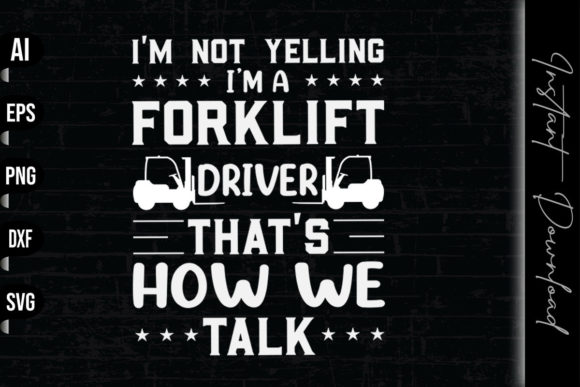
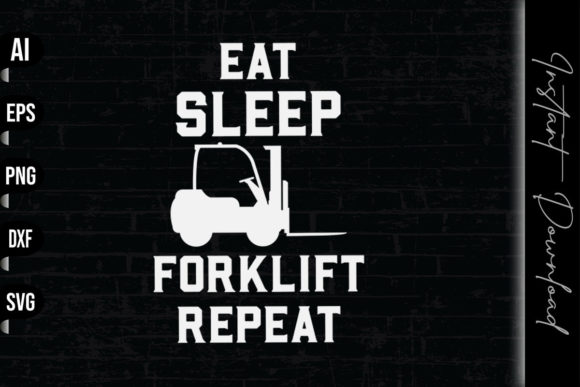
Visually, Eat Sleep Forklift Repeat strikes me as bold and straightforward. The text is the star here, and the message is instantly readable. There is no complex illustration or layered graphic fighting for attention. That directness is a strength for embroidery because it reduces the risk of distortion in small sizes. The mood is lighthearted but grounded. It feels like something a forklift operator would actually wear with pride, not a generic joke slapped onto a shirt. For a custom apparel project, that authenticity matters. Customers who buy this kind of design are often buying for themselves or as a gift for a coworker, and they want the piece to feel personal, not mass-produced.
I immediately thought of a few product directions. A sweatshirt embroidery project with this design on the chest or back would work well for a warehouse team. An embroidered patch version could be sewn onto a work vest or a tool bag. A tote bag design featuring this phrase could appeal to someone who carries gear on the job. The design’s personality fits best on sturdy, everyday items rather than delicate or formal pieces. That is not a limitation—it is a clear use case. Knowing where a design belongs makes selling it much easier.
How It Performs in Real Stitching Situations
Because Eat Sleep Forklift Repeat is primarily text-based, the stitching behavior depends heavily on size, font choice after digitizing, and the fabric you choose. I tested it conceptually against several common project types to anticipate where it will shine and where it might struggle.
- Custom apparel – sweatshirts and t-shirts: On a midweight cotton sweatshirt, this design can look clean and crisp if digitized with a balanced satin stitch for the main letters and a light fill stitch or running stitch for any accent details. The phrase is short enough to fit on a chest without wrapping around the side seam, which keeps the layout professional.
- Tote bags and aprons: These are natural homes for this design. The fabric is usually stable, the surface is flat, and the message feels at home on a work apron or a heavy-duty tote. I would suggest a slightly larger size here so the letters remain readable from a few feet away.
- Caps and curved surfaces: This is where caution is needed. A curved cap surface can distort a long phrase, and Eat Sleep Forklift Repeat has enough characters that fitting it neatly on a cap front requires careful sizing and possibly a curved digitizing path. If you go this route, test it on a practice cap first.
- Baby items and nursery decor: Probably not the right fit. The theme is adult-oriented and work-focused, so I would steer clear of onesies or baby blankets unless the client specifically requests it for a fun grown-up gift.
For commercial embroidery runs—say, a company ordering twenty shirts for their warehouse team—this design can be repeated consistently as long as the digitized file is clean and the stabilizer matches the garment weight. The simplicity of the layout works in your favor here. There are no tiny corners or dense clusters that will cause thread breaks or registration issues.
Where to Use This Design Carefully
No design is perfect for every surface, and Eat Sleep Forklift Repeat has a few zones where I would slow down and test before committing to a production run.
- Small hoop sizes: If you are working with a 4x4 hoop, you may need to shrink the text more than you want. Shrinking a text-heavy design can make the letters lose definition, especially if the font includes thin strokes. Keep the height of the letters above 0.25 inches for satin stitch stability.
- Thin or stretchy fabrics: Lightweight t-shirts and jersey knits can cause the letters to pucker if stitch density is too high. Use a cutaway stabilizer and consider a slightly looser density in the digitizing file to let the fabric breathe.
- Dark fabric backgrounds: The design has no built-in outline or border in the SVG, so if you stitch it on a black or navy garment with dark thread, the message will disappear. Plan your thread colors for high contrast. White, bright yellow, or even metallic thread can make the phrase pop.
- Layered garments: If the project involves a hoodie with a front pocket or a lined jacket, make sure the embroidery area is accessible and flat. Thick seams or zippers near the design area can cause needle deflection.
For handmade product sellers on Etsy or at craft fairs, I would recommend offering this design on a limited set of bases—maybe a unisex sweatshirt, a heavy tote, and a work apron. That keeps your inventory focused and lets you control the quality of each piece.
Visual Appeal, Product Value, and Buyer Engagement
From a design asset standpoint, Eat Sleep Forklift Repeat has good visual appeal for its target audience. The phrase is memorable, easy to read at a glance, and carries a sense of inside humor that resonates with people in the forklift and logistics world. That kind of niche recognition builds customer trust because the buyer feels like the product was made for them, not just for anyone passing by.
When I think about product value, this design sits in a solid mid-range position. It is not so generic that it feels cheap, and it is not so detailed that it drives up production cost with high stitch counts. A well-digitized version should stitch out in a reasonable amount of time, which means you can price the finished product affordably while still keeping a healthy margin. For small shop product owners, that balance is everything.
Giftability is another factor. This design works well as a personalized gift for a forklift driver, a warehouse supervisor, or someone in logistics training. It is specific without being offensive, and the repetition format makes it feel like a familiar inside joke. I can easily see it selling in small batches around the holidays or as a thank-you gift for a team.
Practical Designer Notes Before You Stitch
Here is what I would do before committing to a final product with Eat Sleep Forklift Repeat.
- Test on scrap fabric first: Always. Use the exact fabric type you plan to sell on. Check how the letters sit, whether the stabilizer choice holds the stitches flat, and whether the design distorts after hooping.
- Check thread color contrast: Mock it up in black and white first. If the design disappears against the background at arm’s length, pick a different thread color or add a subtle outline in the digitizing file.
- Review stitch density: Because the SVG is a print-ready file, the digitizing process will determine stitch density. Ask your digitizer for a medium density that works on both woven and knit fabrics.
- Confirm hoop size and machine compatibility: The file format is SVG, so you will need to convert it to your machine’s native format. Make sure your embroidery file supports your specific machine brand before stitching.
- Test it in both personal and commercial scenarios: If you plan to sell the finished items or the digital embroidery file itself, check the license terms that came with your purchase. Some design assets allow commercial use, and some do not. Knowing this upfront protects your craft business from legal issues later.
- Consider a mockup for your shop: Use a printable mockup to show the design on a sweatshirt or tote before you stitch the first unit. That helps gauge customer interest without tying up inventory.
Final Thoughts on This Design for Your Embroidery Work
Eat Sleep Forklift Repeat is a focused, honest design that serves a specific audience well. It is not trying to be everything to everyone, and that is exactly why it works for embroidery project use. It is clean enough to digitize cleanly, relatable enough to sell, and simple enough to produce consistently across multiple handmade products. Whether you are a creative entrepreneur building a small line of warehouse-themed apparel, an Etsy seller looking for a fresh personalized gift idea, or a hobbyist making something for a friend in logistics, this design gives you a solid foundation to build on. Just remember to digitize it thoughtfully, test it on real fabric, and match it to the right product. That is where the real value lives—not in the file itself, but in how well you bring it to life with thread and fabric.