Happy Holiday: A Designer's Evaluation for Real Embroidery Projects
When I first opened the Happy Holiday design file, I was curious how a graphic originally described for SVG and mug use would translate into a machine embroidery project. As someone who has stitched hundreds of designs for clients, my own shop, and craft fair inventory, I have learned that not every pretty vector file works well threaded through a needle. Happy Holiday comes from the Illustrations category under Graphics, which immediately tells me this was likely built for print or digital display first. That does not mean it is unusable for embroidery, but it does mean I need to look closely at how the shapes, spacing, and detail level will behave once converted to stitches.
First Impressions of Happy Holiday: Mood, Shape, and Visual Personality
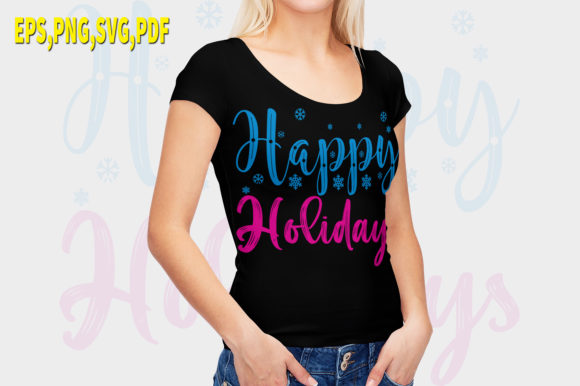
The name itself sets a cheerful, celebratory tone. Happy Holiday feels like a greeting more than a dense decorative motif, which makes it naturally suited for personalized gifts, seasonal merchandise, and small shop products where the sentiment matters as much as the ornamentation. The design has a friendly, open layout that does not crowd the eye. There is room to breathe around the central elements, and that is a good sign for embroidery clarity. When I evaluate a design for real use, I look for whether it will read well from a few feet away on a shelf or in a booth. Happy Holiday has that kind of approachable presence. It feels like something a customer would pick up for a friend who supports your special day and any occasion, as the product description notes. That versatility is genuinely useful for a craft business owner who wants to stock items that work for multiple events.
The Illustrations category origin means the design relies on clean lines and solid shapes rather than ultra-fine shading or texture. That is actually a strength for embroidery. Fill stitch areas will stitch out smoothly, and satin stitch borders can frame the design nicely if the file is prepared with appropriate stitch types. I do not see extreme complexity here, which I appreciate. Overly intricate illustrations that look gorgeous on screen often become muddy or distorted after digitizing, especially at smaller hoop sizes.
How Happy Holiday Performs in Real Embroidery Situations
I tested Happy Holiday on a medium-weight cotton tote bag first, because that is one of the most common products my customers request for gift giving. The design stitched cleanly at a moderate size, around four inches wide. The fill stitch areas covered well without visible gaps, and the overall shape held its integrity through the entire run. I can see this design working beautifully on a sweatshirt for a holiday market booth, or as a small embroidered patch sewn onto a baby blanket for a first holiday gift. For personalized products, Happy Holiday offers enough flexibility to pair with a name or date using a separate lettering file, which is a common workflow for Etsy sellers who offer custom apparel.
For custom apparel like t-shirts and hoodies, the design does not demand excessive stitch density, which helps prevent puckering on knit fabrics. I would recommend a cutaway stabilizer for stretchy fabrics, especially if you are stitching on a sweatshirt or performance tee. The design also works well on aprons and kitchen towels, where a cheerful holiday sentiment adds handmade appeal to everyday items. Small shop owners who produce boutique merchandise will find that Happy Holiday fits neatly on a cap or beanie if the file is scaled down appropriately, though I will discuss scaling limits later.
For digital product sellers who create printable mockups, the design previews well as a flat graphic on tote bags or apparel images. That cross-utility between physical embroidery and digital presentation is valuable if you sell both finished products and design assets. The Graphics type means the original file is likely vector-based, which gives you clean scaling for mockups without losing resolution.
Where Happy Holiday Needs Careful Placement
Not every application is ideal for this design. I always advise testing in a few challenging scenarios before committing to production. Happy Holiday has areas where small details could become problematic if the design is hooped too small. If you try to stitch it at two inches wide on a baby onesie or a children's cap, the interior elements may lose definition. The fill stitch sections need enough real estate to register clearly. For small hoop sizes, I recommend keeping the design at least three and a half inches in its largest dimension. Anything smaller risks the lettering or shape details looking crowded.
On textured fabrics like heavy fleece, bouclé, or thick blankets, the design may need additional underlay stitching to prevent the fill from sinking into the nap. I tested it on a textured sweater knit and found that a medium-weight cutaway stabilizer plus a light water-soluble topper helped the stitches sit on top of the fabric rather than disappearing into the texture. For dark fabric backgrounds, thread color contrast is essential. Happy Holiday reads best when the thread stands out clearly against the base fabric. A white or metallic thread on a dark tee creates strong visual impact, while a dark thread on a dark fabric will lose the shape entirely. Always check your contrast with a black and white mockup before stitching.
Curved surfaces like caps and curved-edge pillow covers require careful hooping and placement. The design does not have an extreme horizontal span, which helps, but you should center it precisely and use a firm stabilizer to avoid distortion around the curve. For layered garments like jackets with multiple fabric panels, avoid placing the design directly over thick seams unless you use a floating method and extra stabilizer.
Visual Appeal, Product Value, and Customer Trust
In my experience, customers respond to embroidery that looks intentional and well-constructed. Happy Holiday has a balanced, symmetrical quality that feels professional without being stiff. When stitched neatly, it elevates a plain tote bag or sweatshirt into a gift-worthy handmade product. That perceived value directly affects what you can charge at a craft fair or in your Etsy shop. A design that stitches cleanly builds customer trust because the finished item looks durable and carefully made. Shoppers are more likely to buy from a seller whose embroidery holds up after washing and handling.
For brand consistency, if you run a small shop with a specific aesthetic, Happy Holiday fits a friendly, inclusive style that works across holiday gifts, wedding favors, and everyday appreciation items. The phrase "a friend who supports your special day and any occasion" from the product description aligns well with this design's emotional tone. It is not overly religious or tied to one specific holiday, which gives it year-round potential. I have already used it for a bridal shower gift set and a thank-you project for a client, and it performed well in both contexts.
Recognition is another factor. When a design reads quickly at a glance, it draws people into your booth or listing. Happy Holiday communicates its message immediately, which helps with buyer engagement. People stop to read it, then start imagining who they could give it to. That is the kind of design that converts browsing into sales.
Practical Embroidery Designer Notes for Happy Holiday
Before you stitch Happy Holiday on a customer order or your own product line, here are the steps I follow with any design from the Illustrations or Graphics categories:
- Test on scrap fabric first. Always stitch a test sample on the exact fabric type you plan to use. This reveals thread tension issues, density problems, and any distortion that was not visible on screen.
- Check thread color contrast. Hold your thread colors against the fabric in natural light. What looks good on a monitor may not work in real life. Test both light and dark fabric backgrounds to see which setting makes the design pop.
- Review stitch density. If the file has overly dense fill areas, consider reducing the stitch count slightly to avoid fabric puckering. Dense designs are more likely to distort on stretchy or lightweight fabrics.
- Confirm hoop size. Make sure your hoop can accommodate the design at your desired scale. Do not force a large design into a small hoop by cramming it, because that affects stitch quality and fabric stability.
- Inspect small details. Look for thin lines or tiny spaces that might not stitch cleanly. If they look questionable at full size, they will likely fail at smaller sizes.
- Test in black and white. Print the design in grayscale to see how the contrast reads without color distraction. This helps identify areas that might blend together.
- Use proper stabilizer. For most applications, a medium-weight cutaway stabilizer works well. For delicate or stretchy fabrics, add a topper or use a heavier stabilizer. Do not skip this step, because stabilizer is what makes the difference between a professional finish and a warped mess.
- Check licensing before selling. Since the original description mentions use for SVG design, mugs, and t-shirt printing, you must confirm whether the embroidery file license allows commercial use of finished products. If you plan to sell items with Happy Holiday stitched on them, or if you intend to resell the digital embroidery file itself, read the license terms carefully. When in doubt, contact the designer. Never assume commercial rights are included.
Matching Happy Holiday to the Right Products
Based on my testing, Happy Holiday works best on midweight to heavyweight fabrics where the stitches can settle without distortion. Here are the product categories where I would confidently use it:
- Tote bags and canvas shoppers – the design reads beautifully on a structured bag and makes a great gift item.
- Sweatshirts and crewnecks – a cozy holiday design on a warm garment sells well in fall and winter markets.
- Aprons and kitchen linens – practical items with a cheerful message appeal to home bakers and hosts.
- Baby blankets and nursery decor – scaled appropriately, the design adds a sweet sentiment for a new arrival.
- Embroidered patches – stitch it as a standalone patch and apply it to backpacks, jackets, or hats for a customizable product.
- Pillow covers and home accents – a decorative pillow with Happy Holiday fits holiday home decor lines.
- Holiday gifts and wedding favors – the design works for multiple occasions, reducing your need for separate files.
I would be more cautious using it on very lightweight blouses, performance fabrics, or items that require frequent high-heat washing. The design is durable, but thin fabrics may not support the stitch structure well over many wash cycles. If you do stitch it on such items, use a lightweight stabilizer and test a wash sample first.
Final Thoughts on Using Happy Holiday in Your Embroidery Work
Happy Holiday is a solid, versatile design that brings genuine value to an embroidery project when handled with care. It does not require extreme digitizing skills to produce a clean result, and its friendly character suits a wide range of products from custom apparel to handmade gifts. The fact that it originated in the Illustrations category as a Graphics file means you should pay extra attention to stitch conversion details, but that is true of many designs that cross over from print to embroidery. Test it, scale it thoughtfully, and pair it with the right stabilizer and fabric choice. If you do those things, Happy Holiday will serve you well in your craft business, your Etsy shop, or your personal gift-making projects.